
A working demo from N4mation Digital
Take a look inside a working catalog.
I built BakingNest, a made-up housewares brand, to show how product details, copy, and images can be managed in Pimcore. It has fifty products, three sales channels, two countries, and three languages. The guide walks through the records and shows how they're used on the storefront and in retailer feeds.
What it looks like
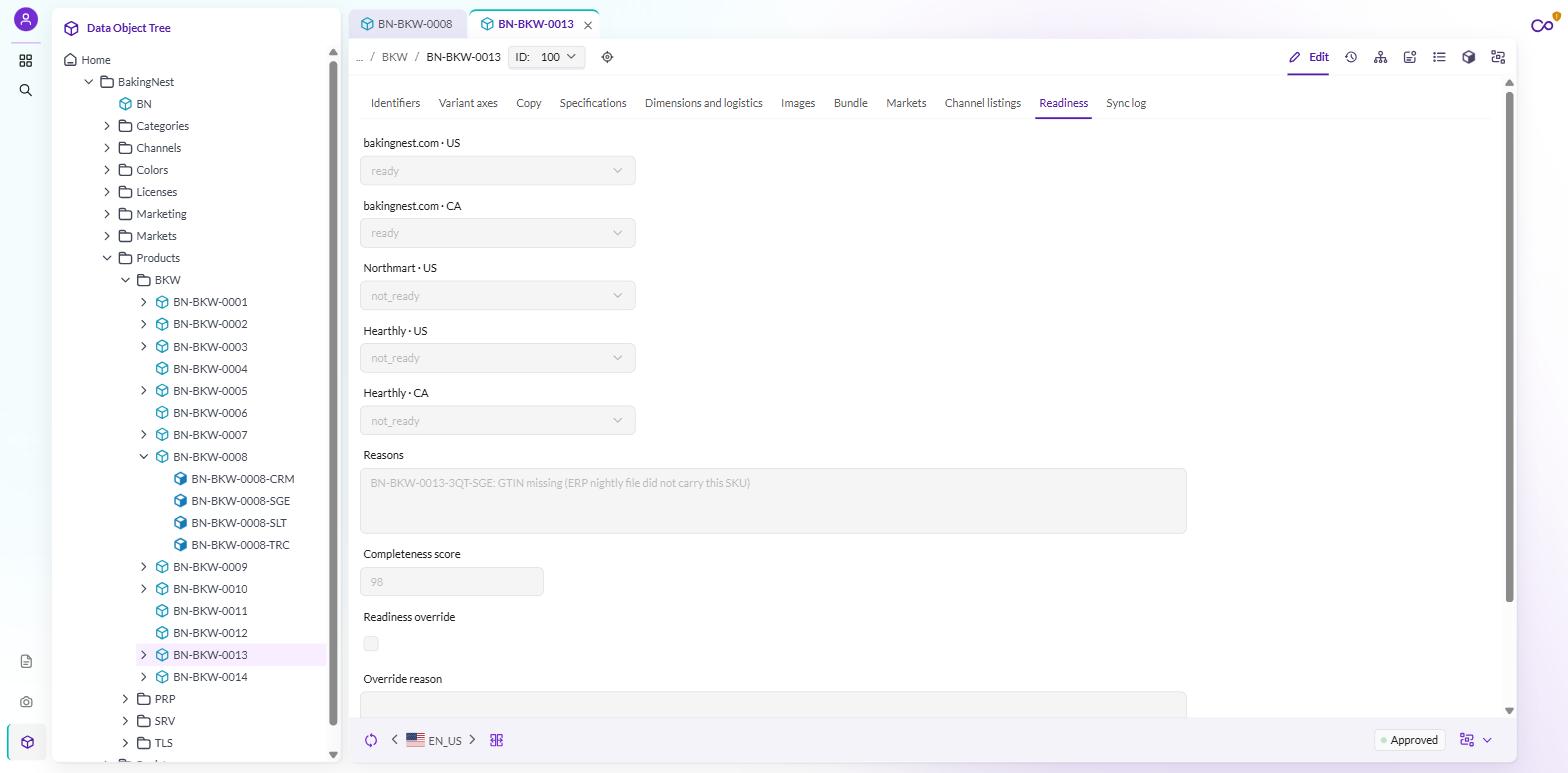
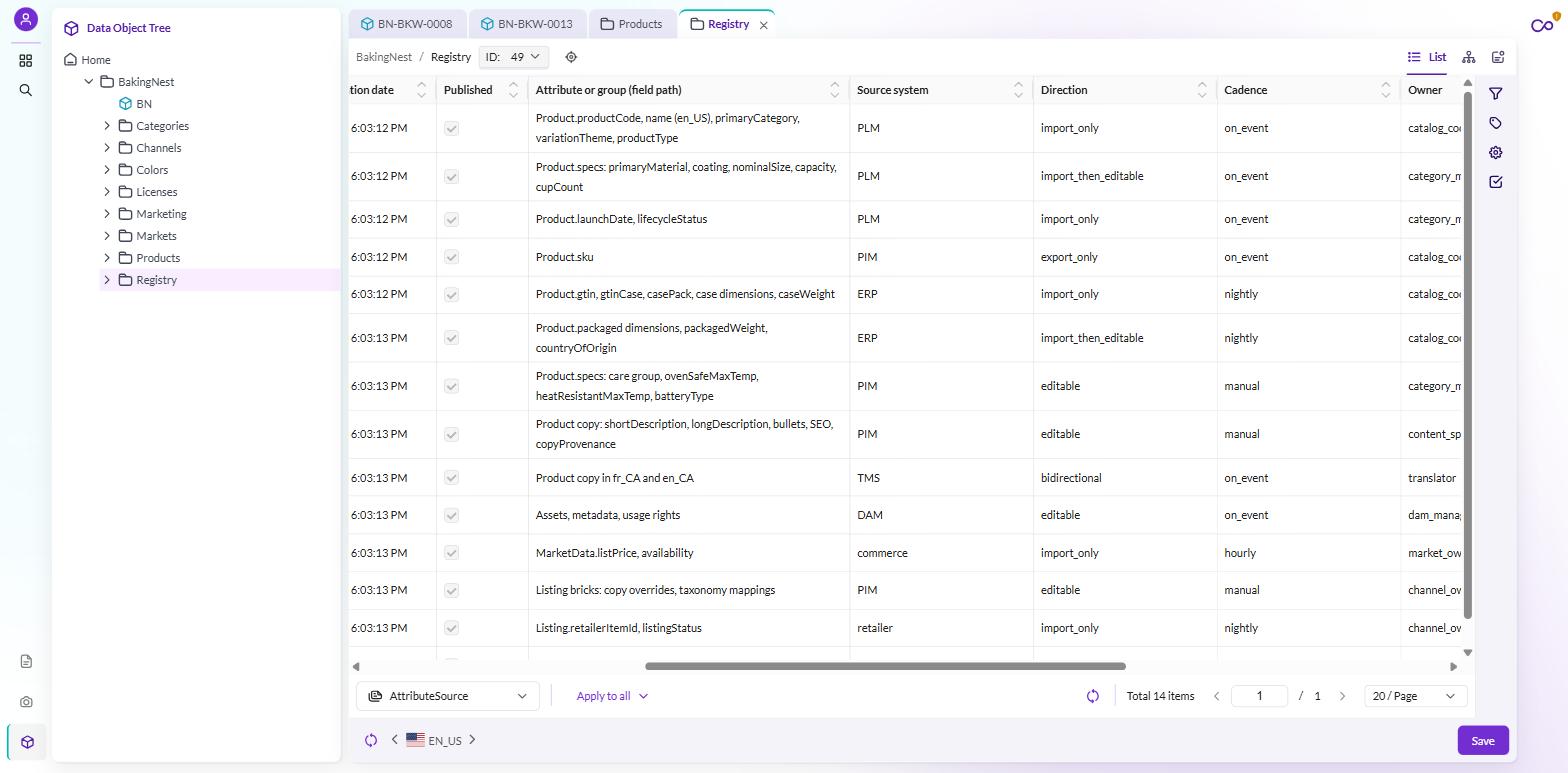
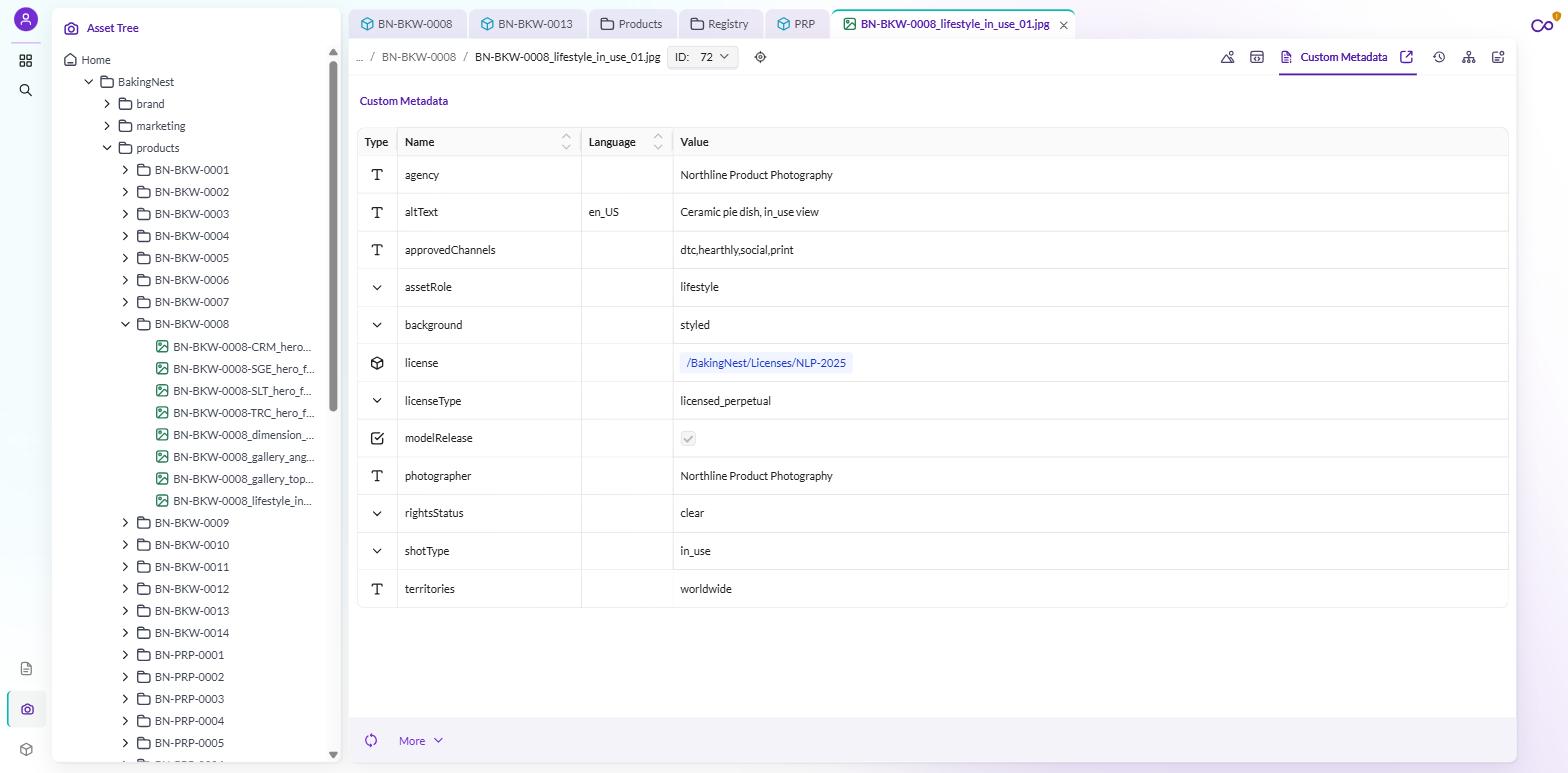
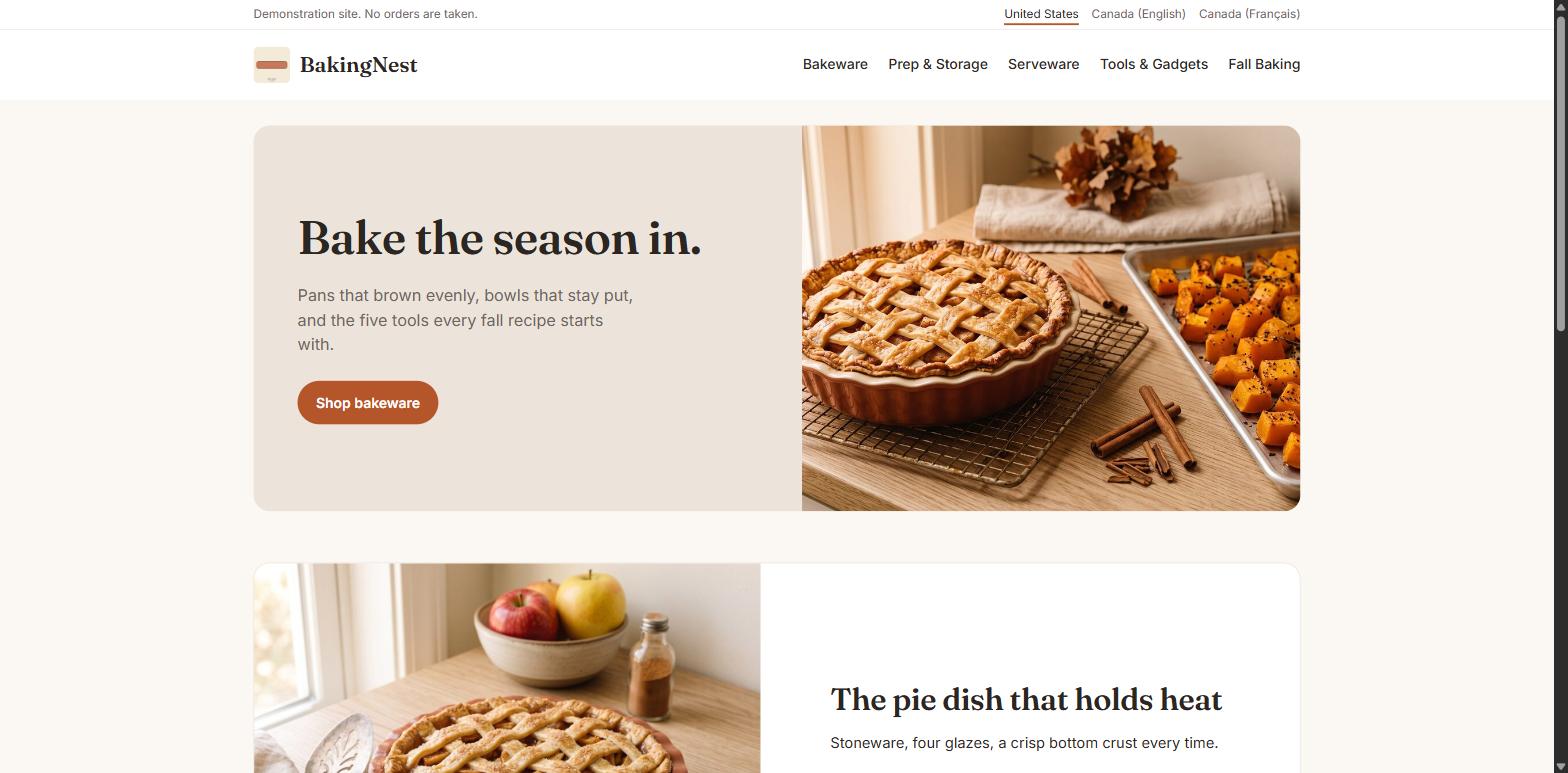
These screenshots show a product's readiness, the fields your team maintains, and an image's usage rights. The first three are from Pimcore, where the information is managed. The fourth is the storefront built from those records. Open any image to see the full screen.
If any of this sounds familiar
The demo covers a few problems that come up when product information is spread across files and systems. Open an example to see the records and decisions involved.
A retailer rejected your product data
The situation
A retailer rejects a setup sheet because case dimensions are missing. Your team has to find the values, update the file, and submit it again.
In the demo
One example has a SKU with a missing UPC. Its product record names the missing value and the system responsible for supplying it. You can also open the retailer's requirements and see why that SKU is held back.
Product details disagree across channels
The situation
Someone corrected the oven-safe temperature in the spreadsheet, but the site, the marketplace listing, and the printed sell sheet still show different values. Each copy needs to be found and updated.
In the demo
The storefront reads product details from Pimcore. The retailer and marketplace feeds use the same records, with the fields and units each channel requires. You can trace a value from the product record to the page or feed that uses it.
Copy and translations are hard to keep current
The situation
The English description changed after the French translation was approved. The translator wasn't told, and the two pages now describe the product differently.
In the demo
Each language has its own copy and translation status on the product record. One example is still awaiting French translation, and its French page identifies the missing copy. You can also see how marketing content is reused across pages in three languages.
An image is still in use after its license ended
The situation
A photo's license has expired, and your team needs to find every place it's used. Several copies exist, and the license agreement is in a separate folder.
In the demo
Images have records for the photographer, license, and usage dates. Open the example with an expired license to see the affected products and why they aren't ready for the storefront.
Nobody knows who maintains a field
The situation
The UPC in your operations system differs from the one in the product spreadsheet. It's unclear which value to use or who should correct it.
In the demo
The attribute registry records where each value comes from, who maintains it, and which source takes priority when values disagree. This is the kind of ownership I help teams agree on before configuring their tools.
You need to know which products are ready to launch
The situation
A range is due at the retailer on Friday. Finding out whether the product information is ready means checking several files and asking each person for an update.
In the demo
Product records show readiness by channel and country, with reasons for anything held back. The feed includes ready SKUs and produces a separate report of those excluded. You can review both files alongside the product records.
Get the demo link
Enter your email and I'll send you a link that signs you into your own read-only account and opens the guide. You can explore the records without changing them. If you'd like to discuss your team's situation, email me and we'll find a time to talk.
BakingNest is invented. Nothing in the demo is client data.